📄 Digital book in PDF · read it on your phone or print it
Recommissioning, valve clearances, points and timing, the slide carburettor, the wet clutch, chain slack and where home maintenance ends. Every job has its own page: first the drawing, then what you need to remember. 67 illustrated pages.
🔒 Secure checkout · PDF by email · 30-day guarantee
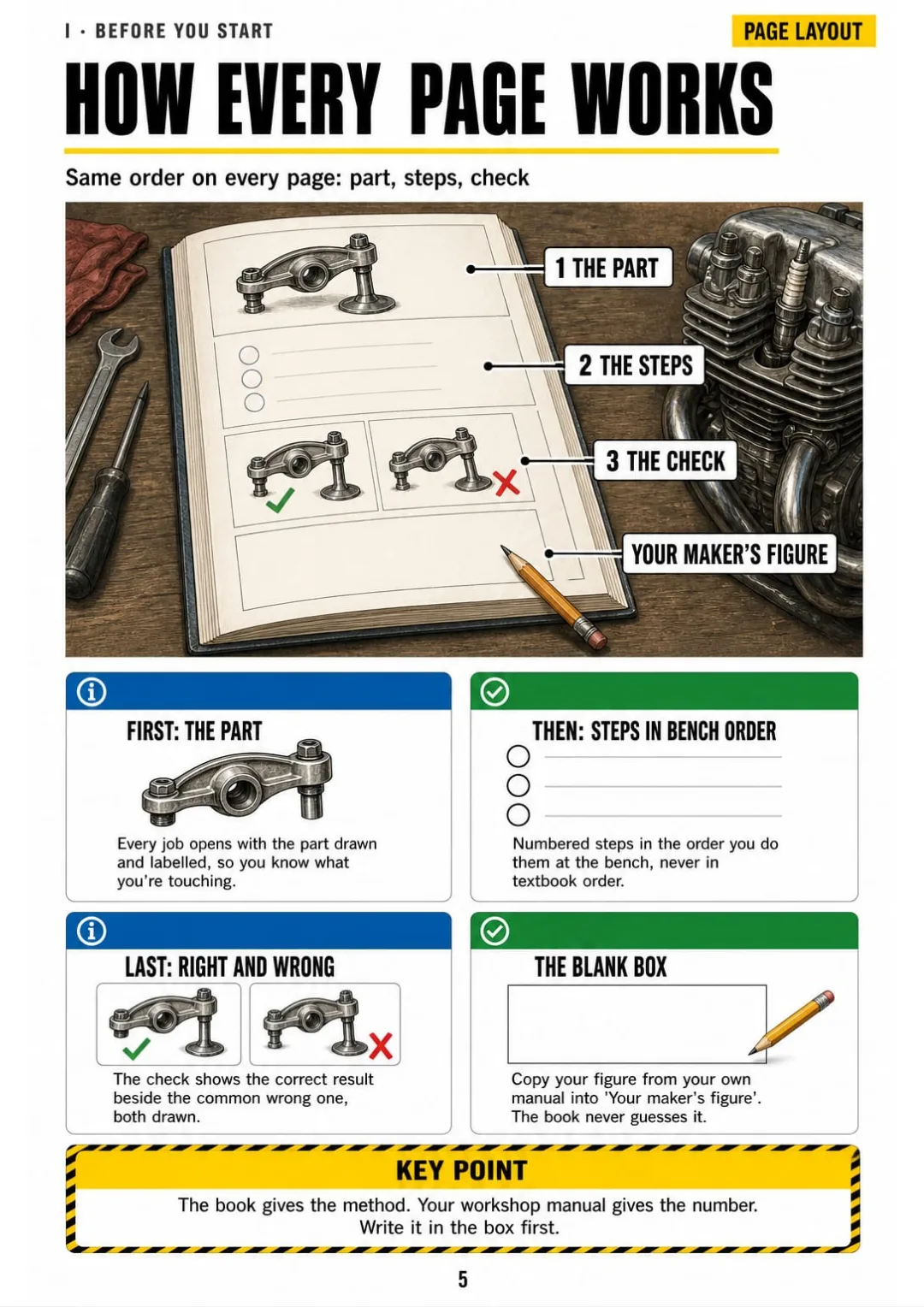
Every page has a large drawing and a box with the steps and checks you need, plus a space for your maker's figure:


Swipe to see more →
These are real pages from the book. The table of contents is the full one: 9 parts and 63 topics.
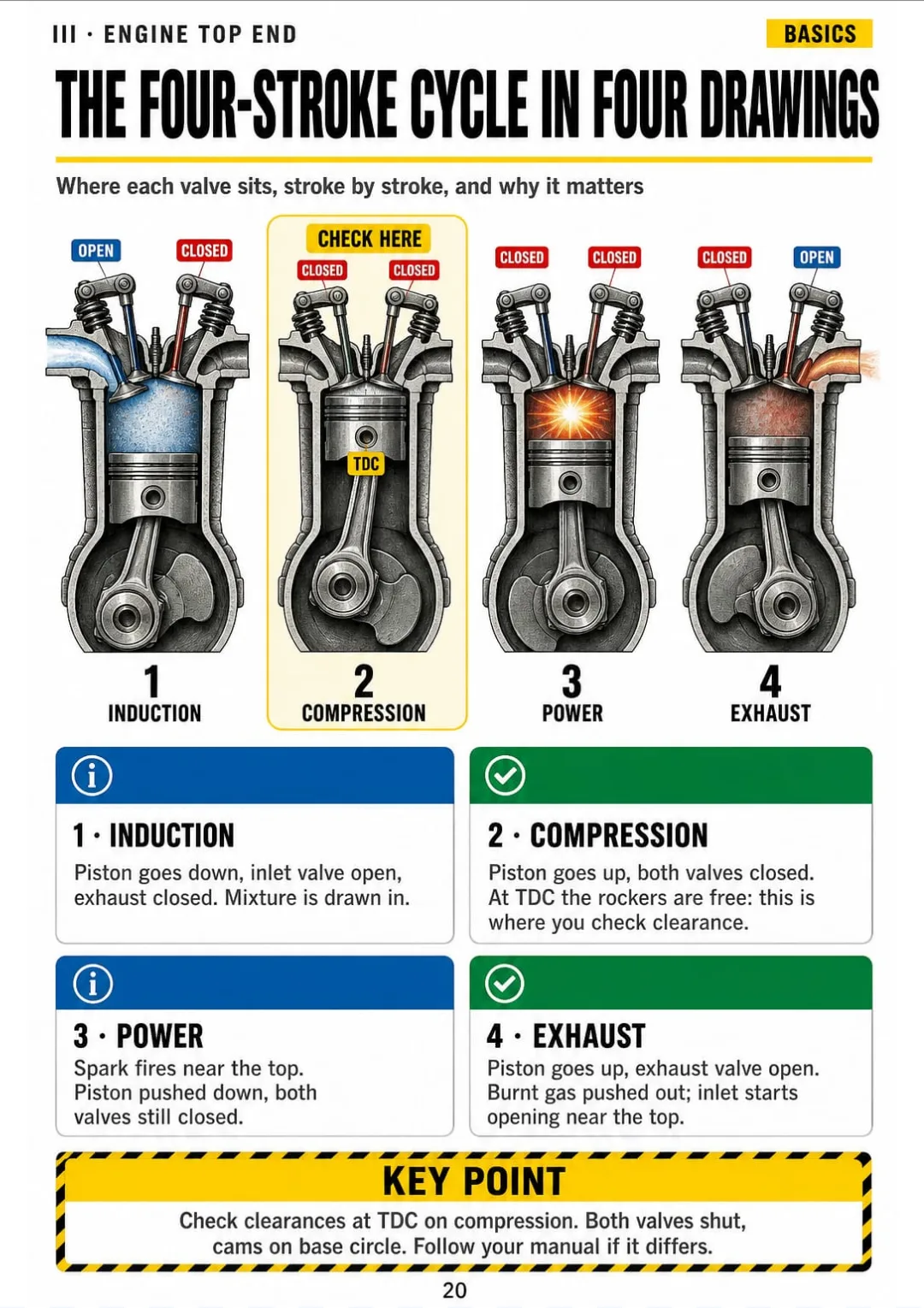
You're kneeling by the bike with the feeler gauge in your hand, and the manual says: set the clearance at TDC on the compression stroke. But the piston comes up twice. Which time is the right one?
The manual covers the four-stroke cycle in two dense paragraphs and a valve timing table. Words describing four movements you can't see inside the engine.

In the book, the four-stroke cycle is four drawings side by side: induction, compression, power, exhaust. At TDC on compression both valves are shut and both rockers are free. You see it, and you know which stroke you're on.
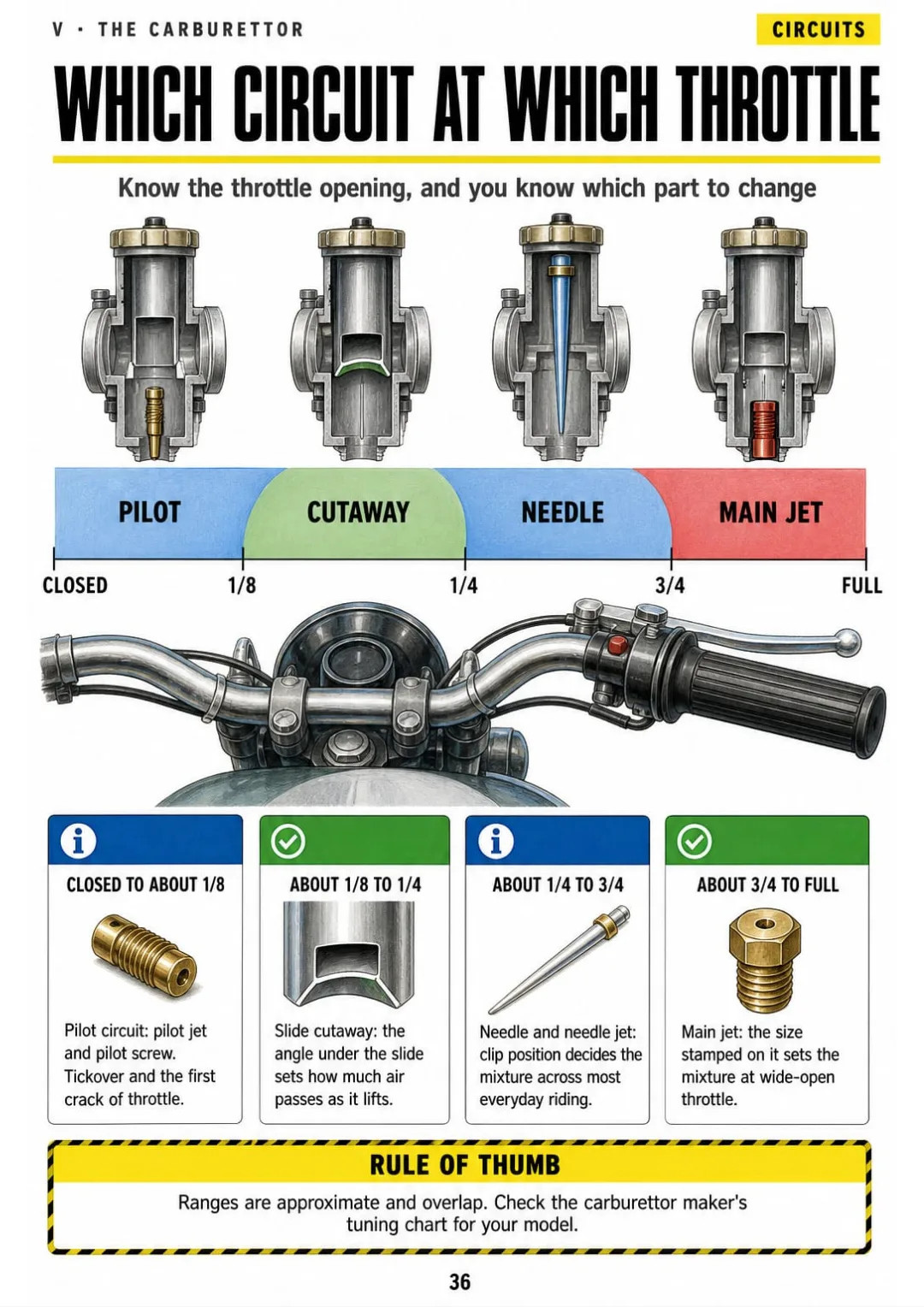
Every other job gets the same treatment: the recommissioning order, the points system, which carb circuit works at which throttle opening, the wet clutch, chain slack. One job, one page.
So you find compression, slide the gauge in and set the clearance, and the manual only comes out for your maker's figure.

Before you start, waking a laid-up classic, the top end, ignition, the carburettor, clutch and gearbox, final drive, the machine-shop line and bench checklists: 67 pages, all illustrated.
Think of it this way:
It's the first dry Saturday of spring. The bike has been under a cover since October and you want it running by lunchtime, without kicking it over on stale petrol and old oil.
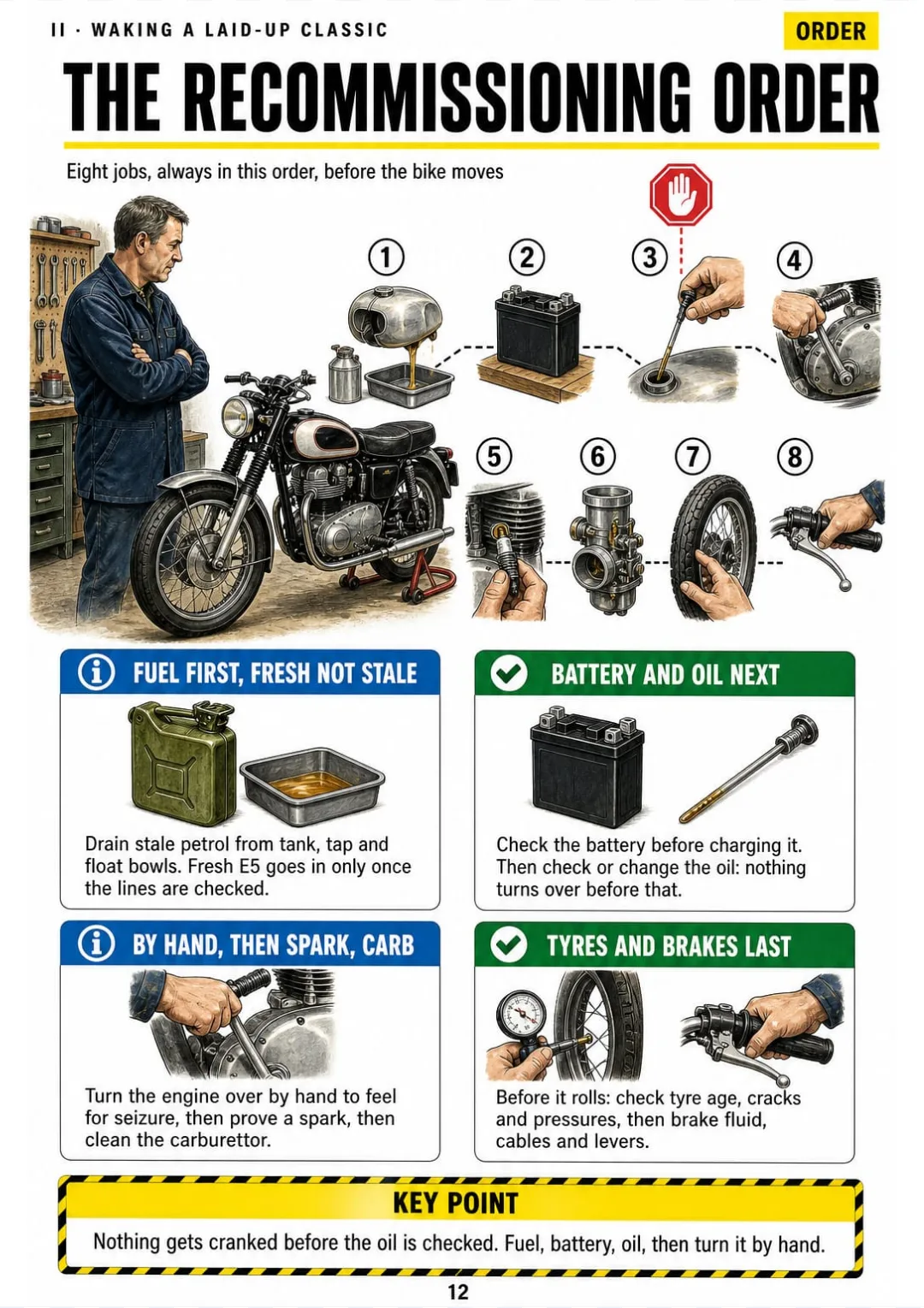
You open the book at the recommissioning order and see it drawn as a sequence: fuel, battery, oil, turn it by hand, spark, carb, tyres, brakes, each with its own check.

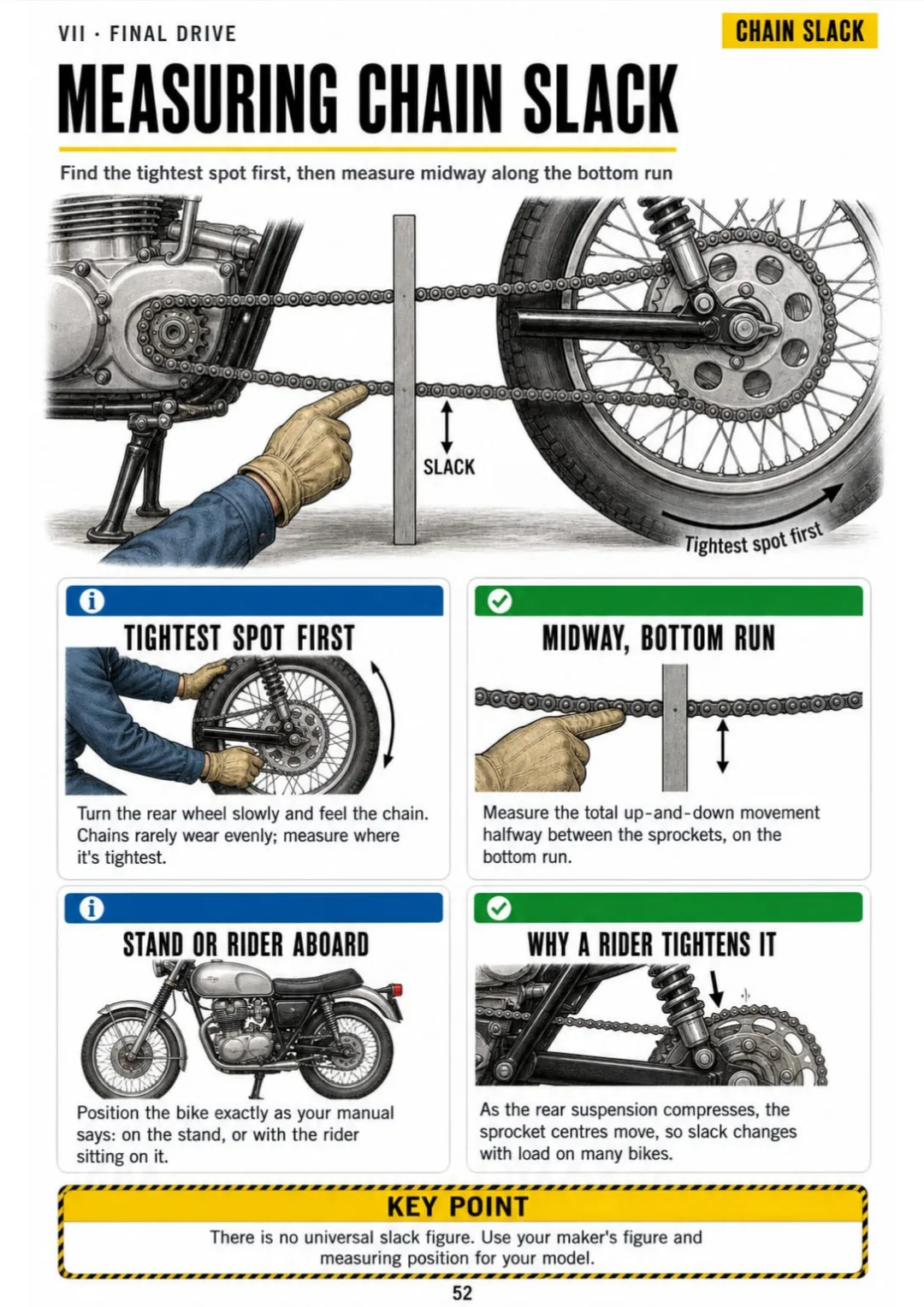
Same with the points gap, the float height, the needle clip, clutch free play and chain slack: each one on its own page.
Classic Motorcycle Engine Illustrated is 9 parts and 63 topics, all drawn, and it finishes with a spring checklist, the most frequent setting-up mistakes and a winter lay-up routine.
What you see drawn, you don't have to memorize.
How every page works, finding your maker's figures, two-stroke or four-stroke, British or Japanese threads, the bench toolkit, garage safety and photographing before you undo anything.
The recommissioning order, stale petrol and E10, tank and fuel lines, the battery, turning it over by hand, the oil change, tyres, brake fluid and cables.
The four-stroke cycle, why valve clearance matters, finding TDC, the feeler gauge, adjusting and rechecking, a twin worked through, compression test and reading a plug.
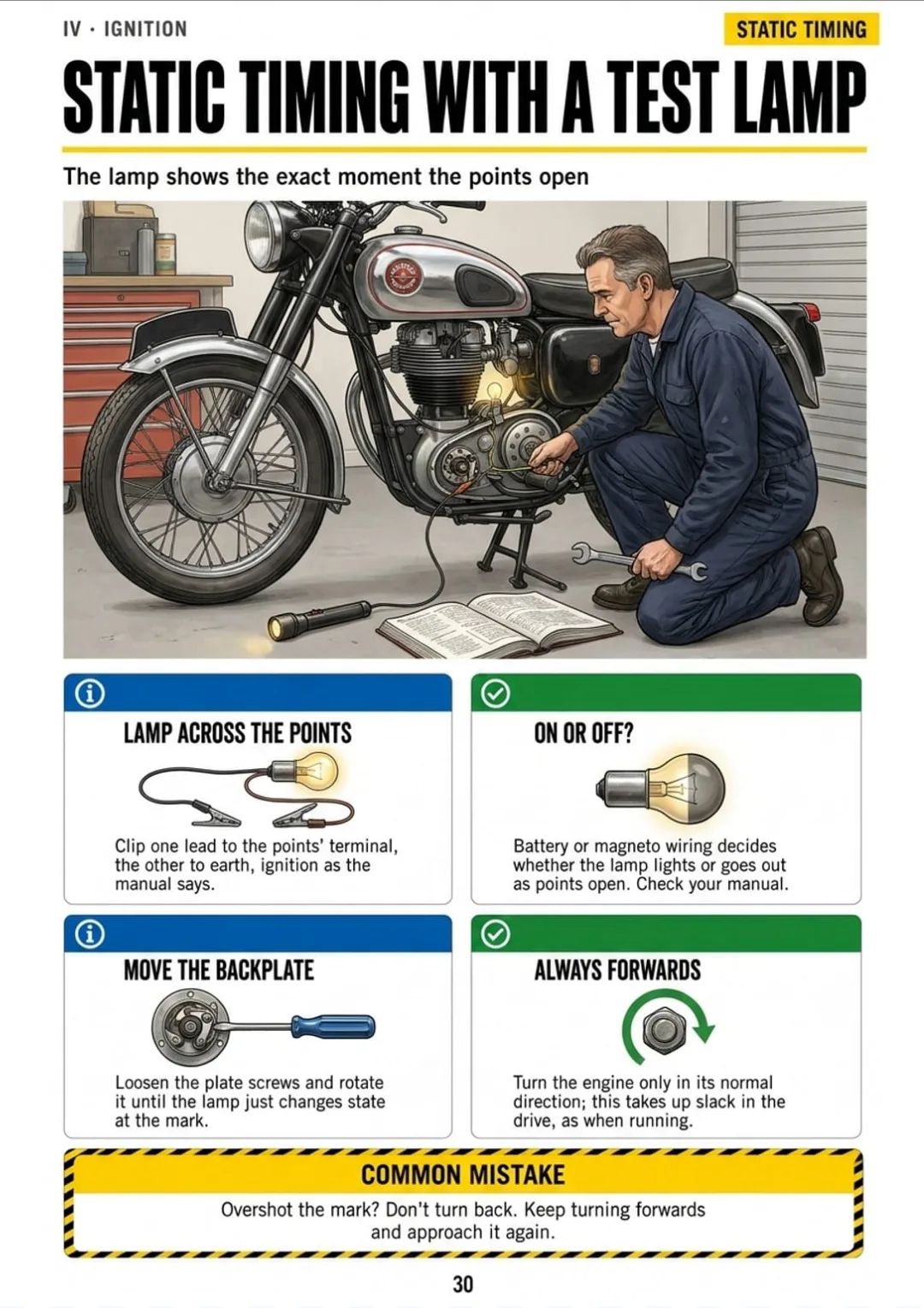
The points system labelled, the points gap, static timing with a test lamp, timing a single, strobe timing, the condenser, no spark and electronic conversions.
Which circuit at which throttle, the slide carb exploded, strip and clean, float height worked through, needle clip, pilot screw, balancing twins, air leaks, rich or lean.
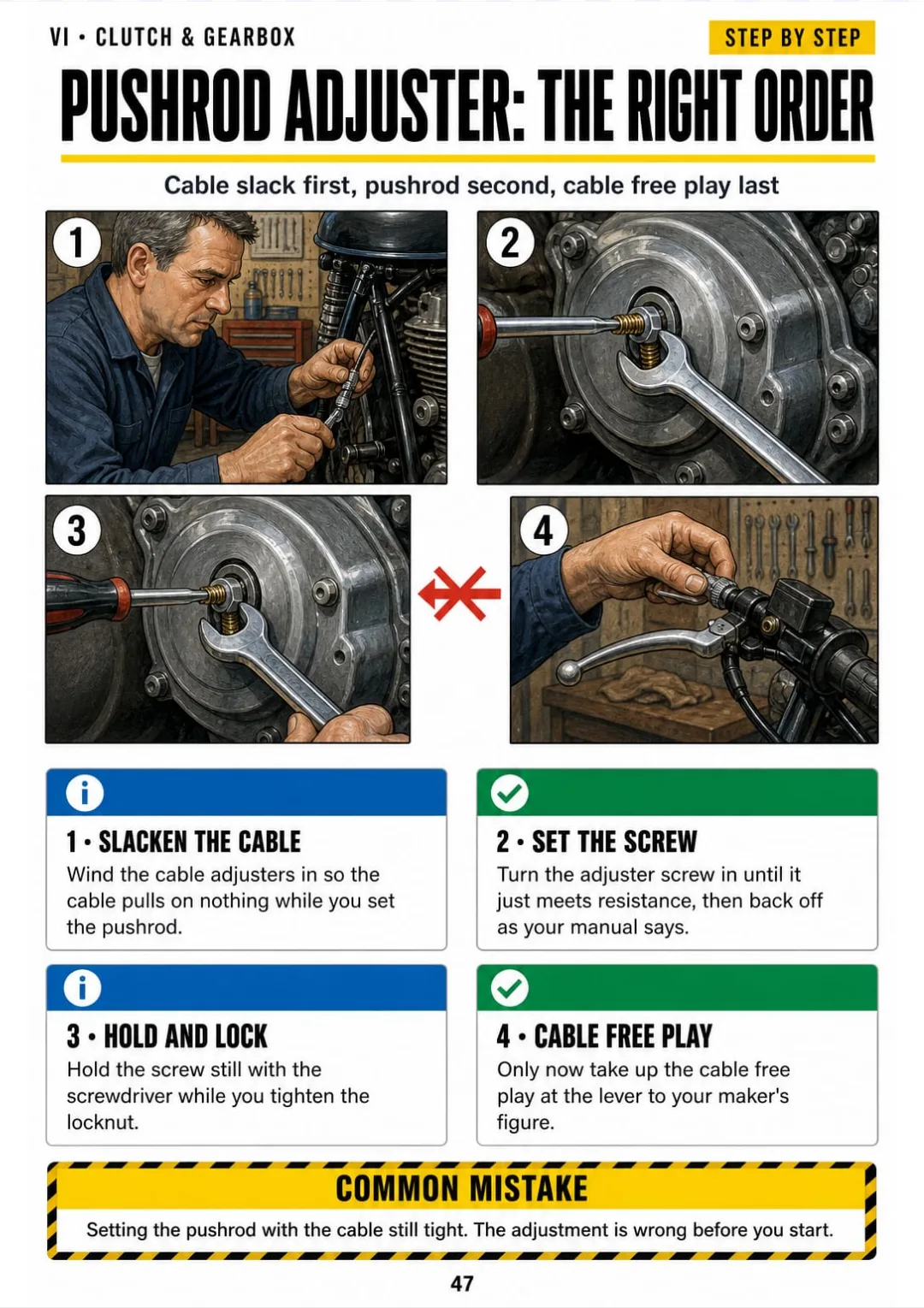
How a wet clutch works, cable free play, the pushrod adjuster, checking plates, slip or drag, primary chain tension and gearbox oil.
Chain slack, adjusting and aligning the rear wheel, a worn chain, sprocket teeth, the spring link the right way round, cleaning and lubrication.
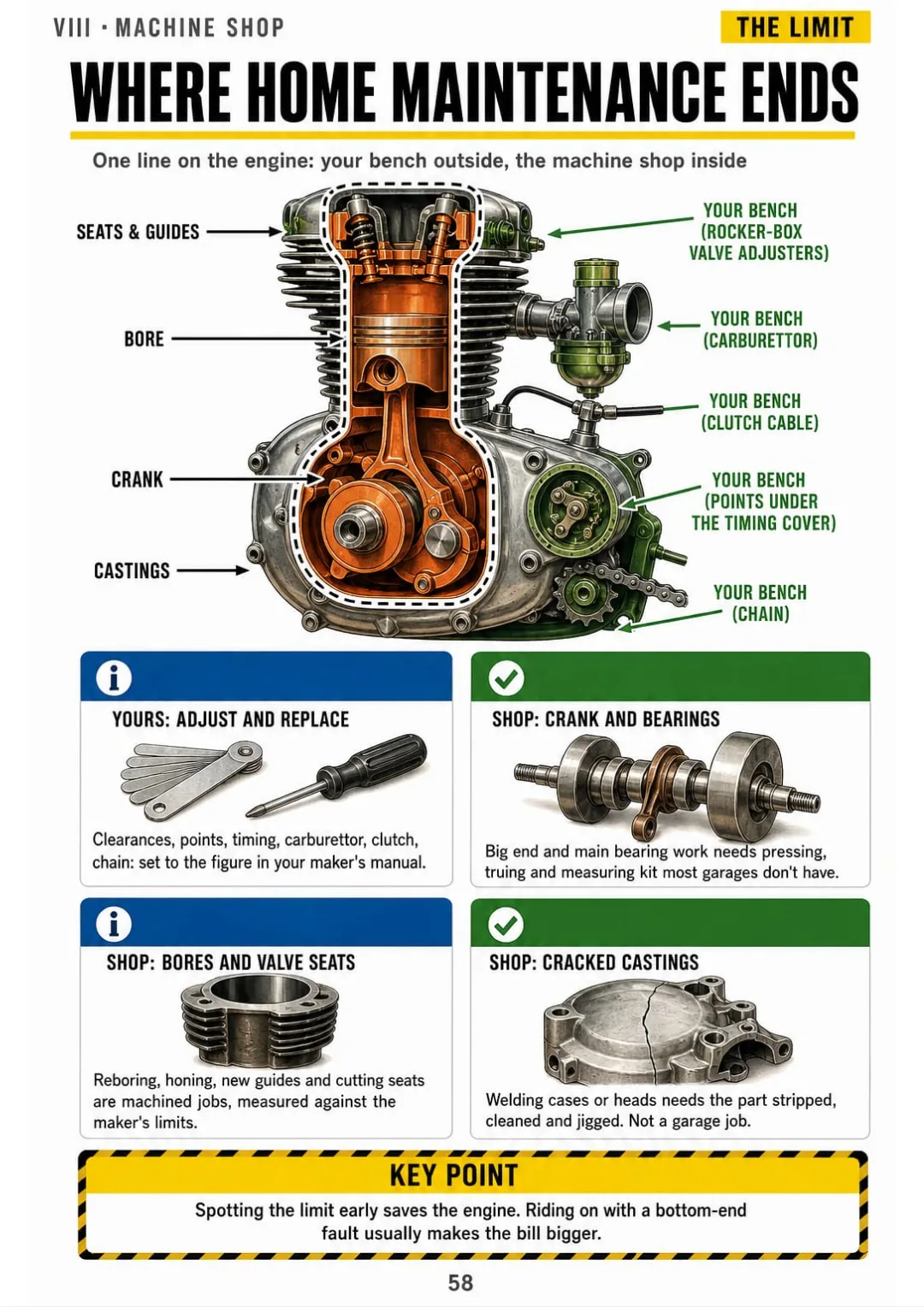
Where home maintenance ends, bottom-end knocks, blue smoke, stripped threads and cracked castings, and what to take to the machine shop.
Spring recommissioning checklist, the most frequent setting-up mistakes, the first-ride shakedown, a ten-minute monthly routine and laying it up for winter.
At the end of the book: A spring recommissioning checklist, the most frequent setting-up mistakes and a ten-minute monthly routine.
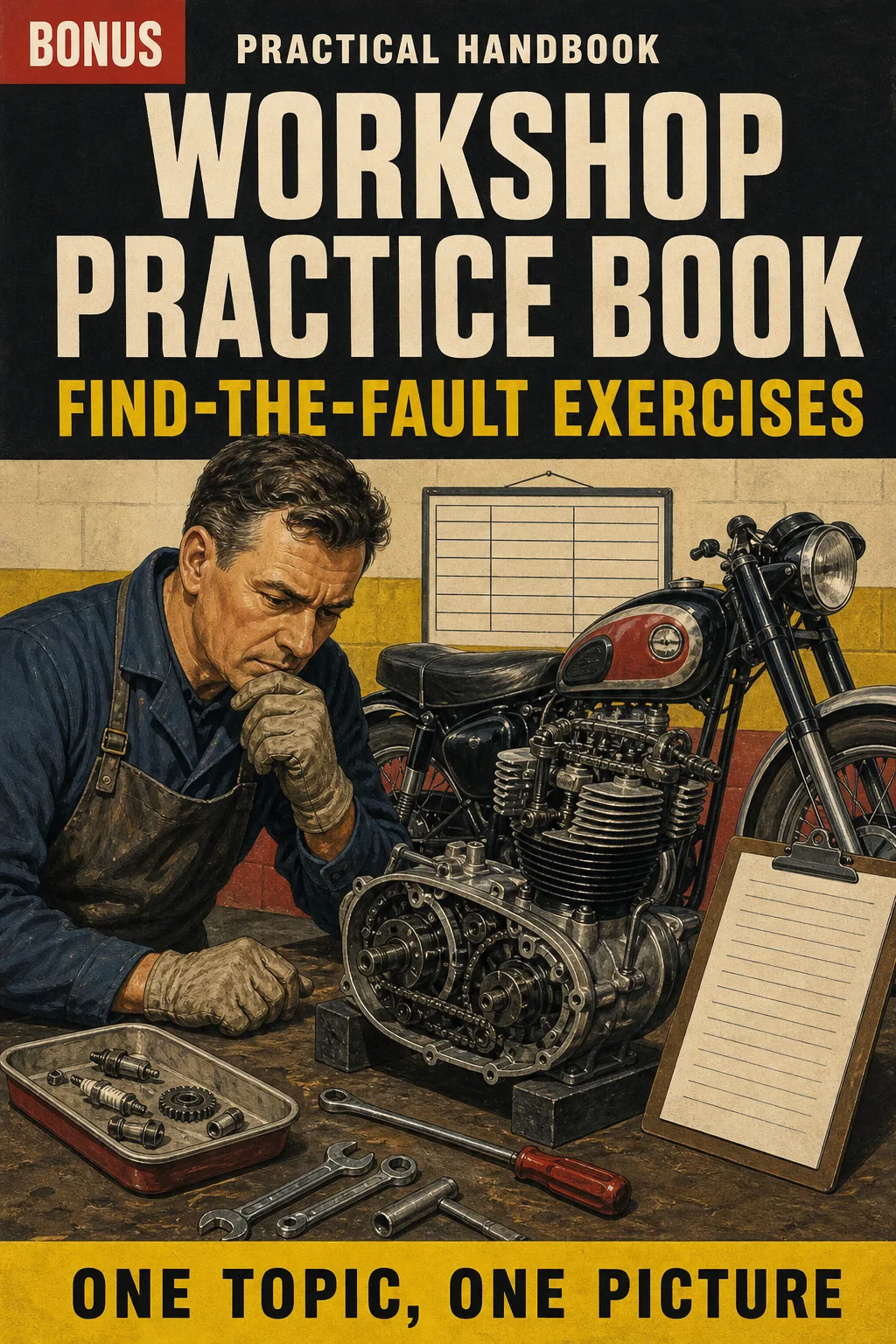
Drawn workshop scenarios (a plug, a feeler gauge reading, a sagging chain, a weeping gasket) where you spot what's wrong and check your answer, so the set-up steps stick before you pick up a spanner.

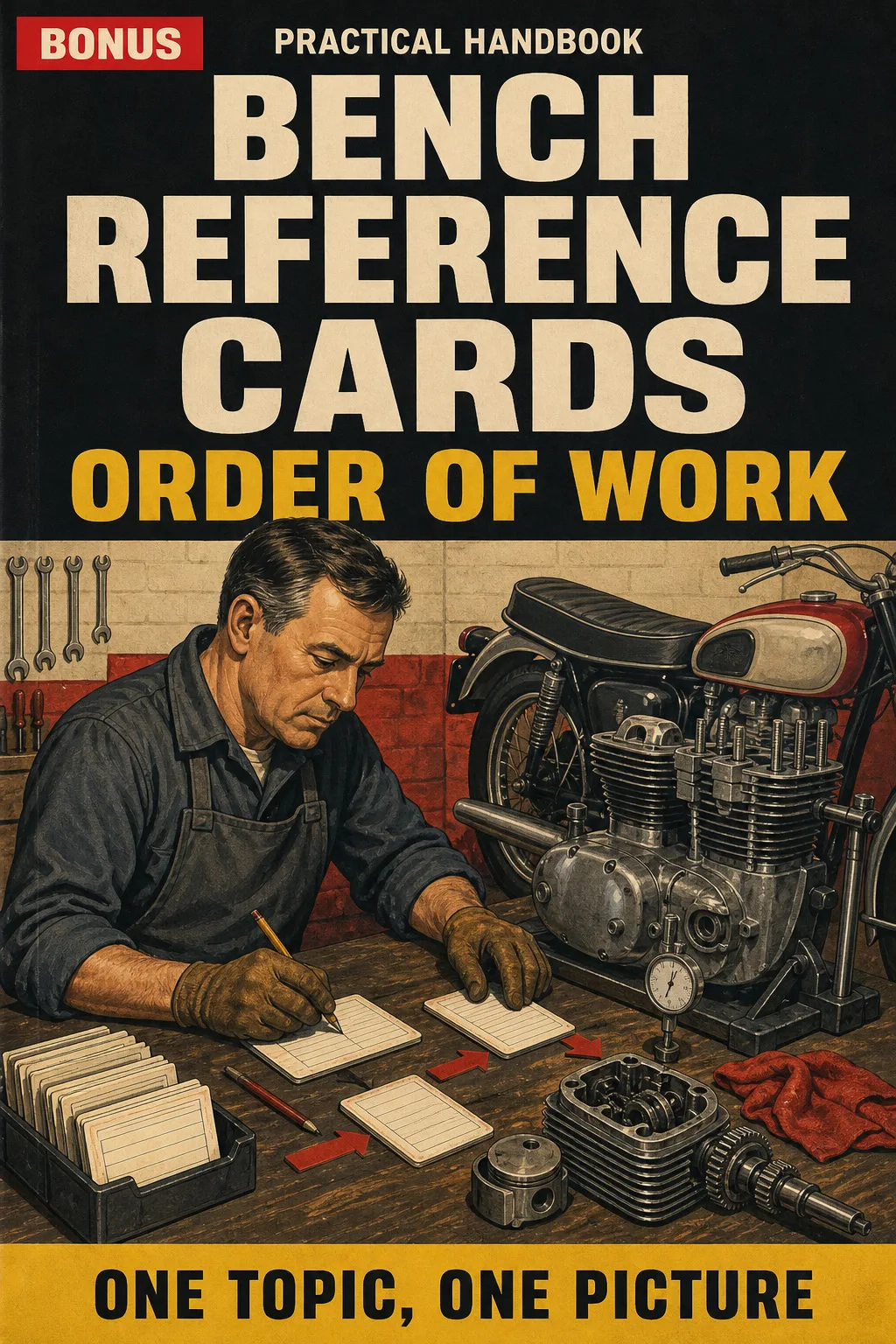
Printable one-page cards for the bench with the order of work for each job and the most common mistakes before and after, so you can glance at them with oily hands instead of flicking through the book.
📄 This is a digital PDF book sent to your email: nothing is printed or shipped.
PDF by email: We email you Classic Motorcycle Engine Illustrated as a PDF, together with the two free books. It's a single payment: no installments, no extra charges.
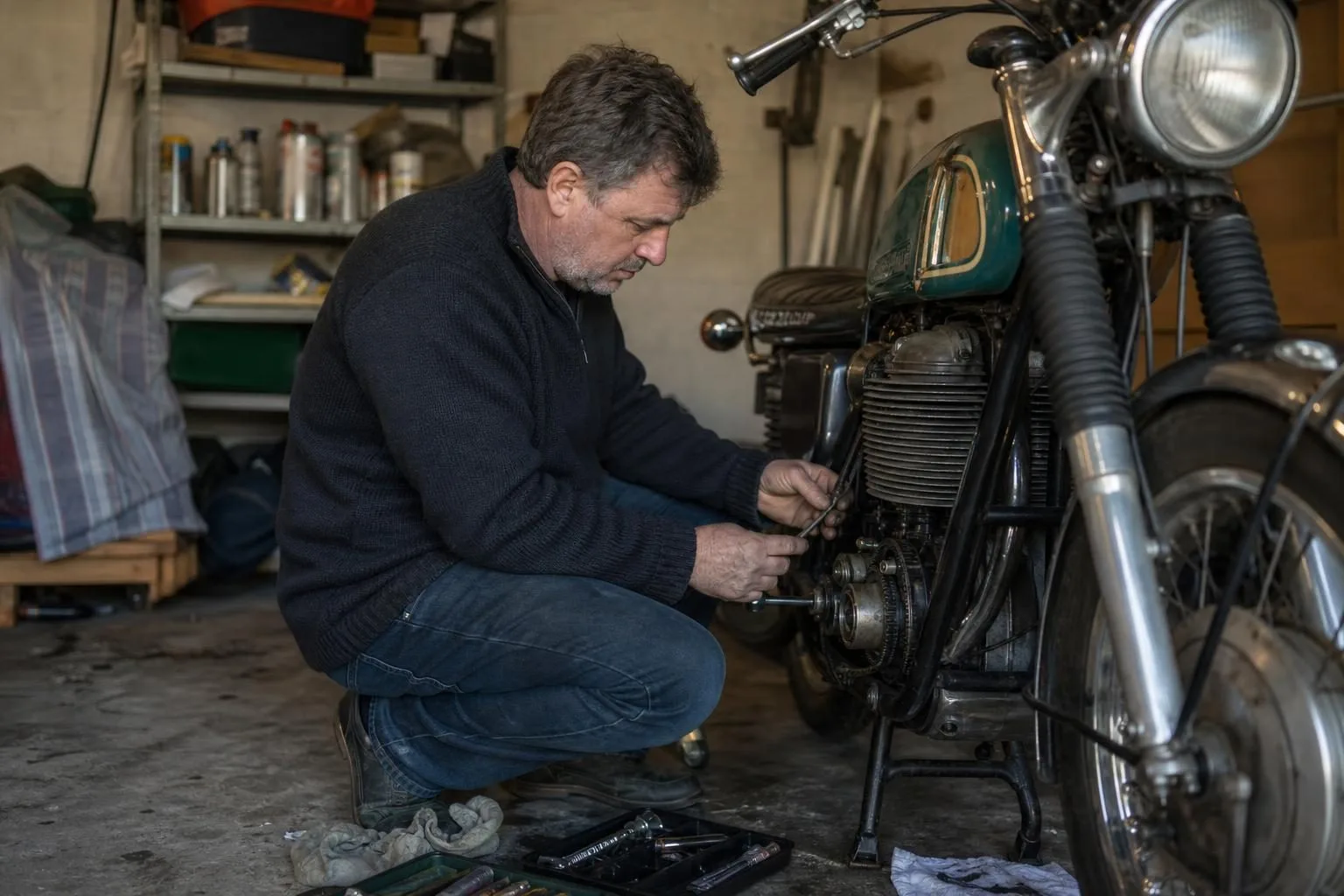
Bought back the bike you had at nineteen, or inherited one? Each job is drawn in the order you do it, so you learn the engine one page at a time.
The bike's been laid up all winter. You follow the recommissioning order page by page and tick it off on the checklist before the first ride.
Oil and plugs are second nature. Now you set valves, points and the carb with a drawing in front of you, and you know which jobs belong to a machine shop.
📄 This is a digital PDF book sent to your email: nothing is printed or shipped.
Try Classic Motorcycle Engine Illustrated for 30 days, bonus books included.
We refund everything if the file won't open, if the book isn't what you see here, if you were charged twice or if the email doesn't arrive. Just email us.
You pay once. No subscriptions.
Yes, if it's a four-stroke with slide carburettors and coil-and-points ignition, British or Japanese: the book doesn't name makes and draws each system as it works on both, with a page on British and Japanese threads. Part 1 explains what changes on a two-stroke, but the jobs are worked through on four-strokes. Magnetos and CV carburettors aren't covered step by step. Every figure comes from your maker's workshop manual.
From standard workshop practice for classic engines. It works alongside your workshop manual, not instead of it: the book draws the job and the order to do it in, and your manual gives the figure (clearances, gaps, timing, float heights), which you write in the box on each page. Roadworthiness points follow the DVSA MOT inspection manual for motorcycles, useful even if your bike is MOT-exempt.
No. It's an independent illustrated book, not affiliated with or endorsed by any manufacturer or by the DVSA.
No. It's a bench book for owners who do their own maintenance. Crank, bores, valve seats and castings go to a machine shop, and if you're unsure about brakes or tyres, have them checked by a professional.
No. Each job starts from what you can see on the bike and goes step by step, in the order you do it. The find-the-fault exercises are written for this book, and the jobs for a machine shop are marked clearly.
The book and the 2 free books come as PDFs by email, to the address you enter at checkout.
No. It's a one-off payment.
Yes. It's a printable PDF: print it at home or at a print shop and keep the bench cards by the bike.
You have 30 days. We refund everything if the file won't open, if the book isn't what you see on this page, if you were charged twice or if the email doesn't arrive: just email us.
No more rereading the manual with nothing sticking.
Valve clearances, points and float height: you see them drawn, and that's it.
You walk into the garage knowing where every job is.
Drawings make studying faster.
The book is right below.
One-time payment: US$ 27 · Guarantee: 30 days · PDF by email
YES, I WANT CLASSIC MOTORCYCLE ENGINE ILLUSTRATED FOR US$ 27📄 This is a digital PDF book sent to your email: nothing is printed or shipped.